

Three Teenagers, One Shanghai Cooking Class: Learning to Make Xiaolongbao Together
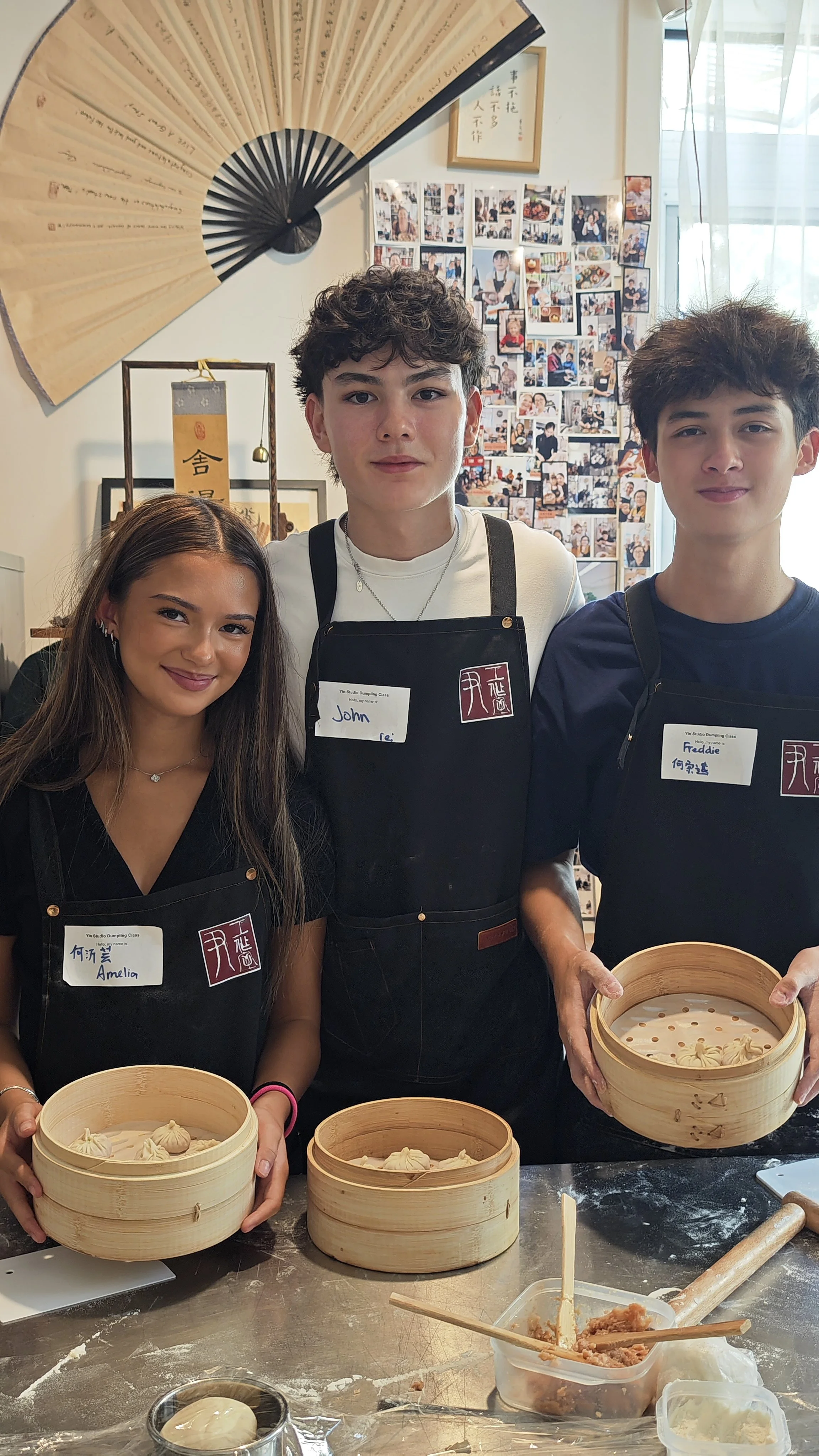
Three teenagers holding their homemade xiaolongbao after a cooking class in Shanghai
What happens when three teenagers from a Hong Kong international school come to Shanghai for a private Chinese cooking experience?
A lot of dumplings, quite a bit of laughter, and—according to one very honest 13-year-old—xiaolongbao that are even better than Din Tai Fung.
A few days ago, we welcomed three teenagers, aged 13 to 16, to our studio for a private xiaolongbao cooking class.
Their mother came along to observe, while the three teenagers took over the table and got to work.
They already had very different personalities, which made the class especially fun.
The older sister-Amelia came with her boyfriend-John, while her younger brother-Freddie, the youngest of the group at 13, was described by his mother as a particularly picky eater.
"If he doesn't like something, he absolutely won't eat it," she told us.
So we were curious to see what he would think of his own homemade soup dumplings.
Three Teenagers, Three Different Approaches
The three students were all very independent.
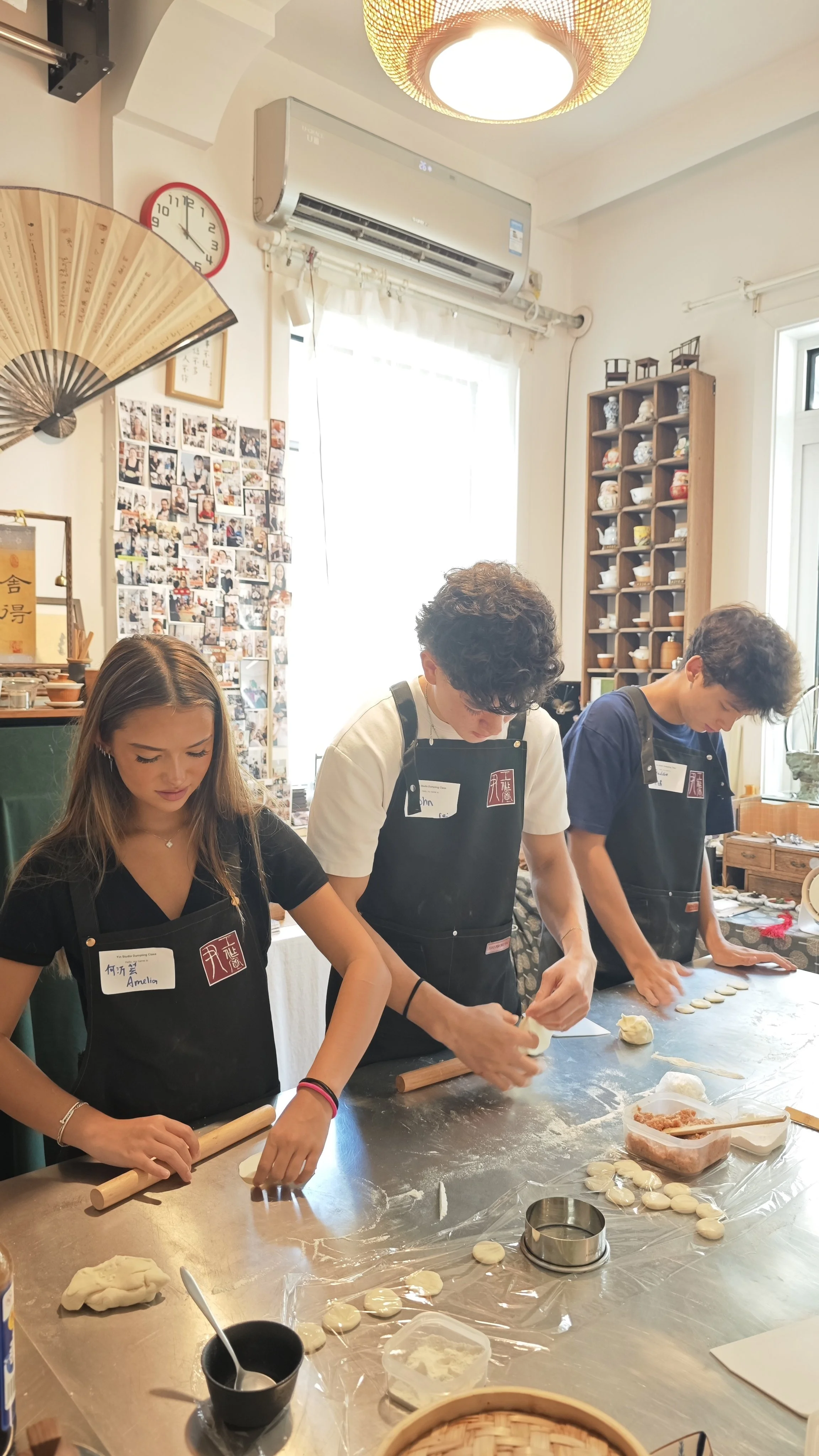
Teenagers learning to make Shanghai soup dumplings
They were comfortable preparing ingredients, following instructions, and working through the steps themselves. Their Chinese was also quite different.
Amelia and Freddie both spoke Chinese very well, while John's Chinese was more limited, so we mainly communicated in English, with some Chinese mixed in naturally throughout the class.
John also speaks some Japanese, which occasionally gave us another language to work with.
For a group of teenagers who grew up in an international school environment, it was interesting to see how naturally they moved between languages and cultures.
Freddie is only 13, but he will soon be heading to the UK for school. Amelia had already spent a year studying in the UK.
They may be young, but they are clearly already becoming very independent.
Learning the Art of Xiaolongbao
Making xiaolongbao looks easier than it actually is.
One of the trickiest parts for beginners is learning how to work with the thin dough while keeping enough control to create a beautiful shape.
Our students all did surprisingly well.
Amelia was especially determined to follow our technique exactly.
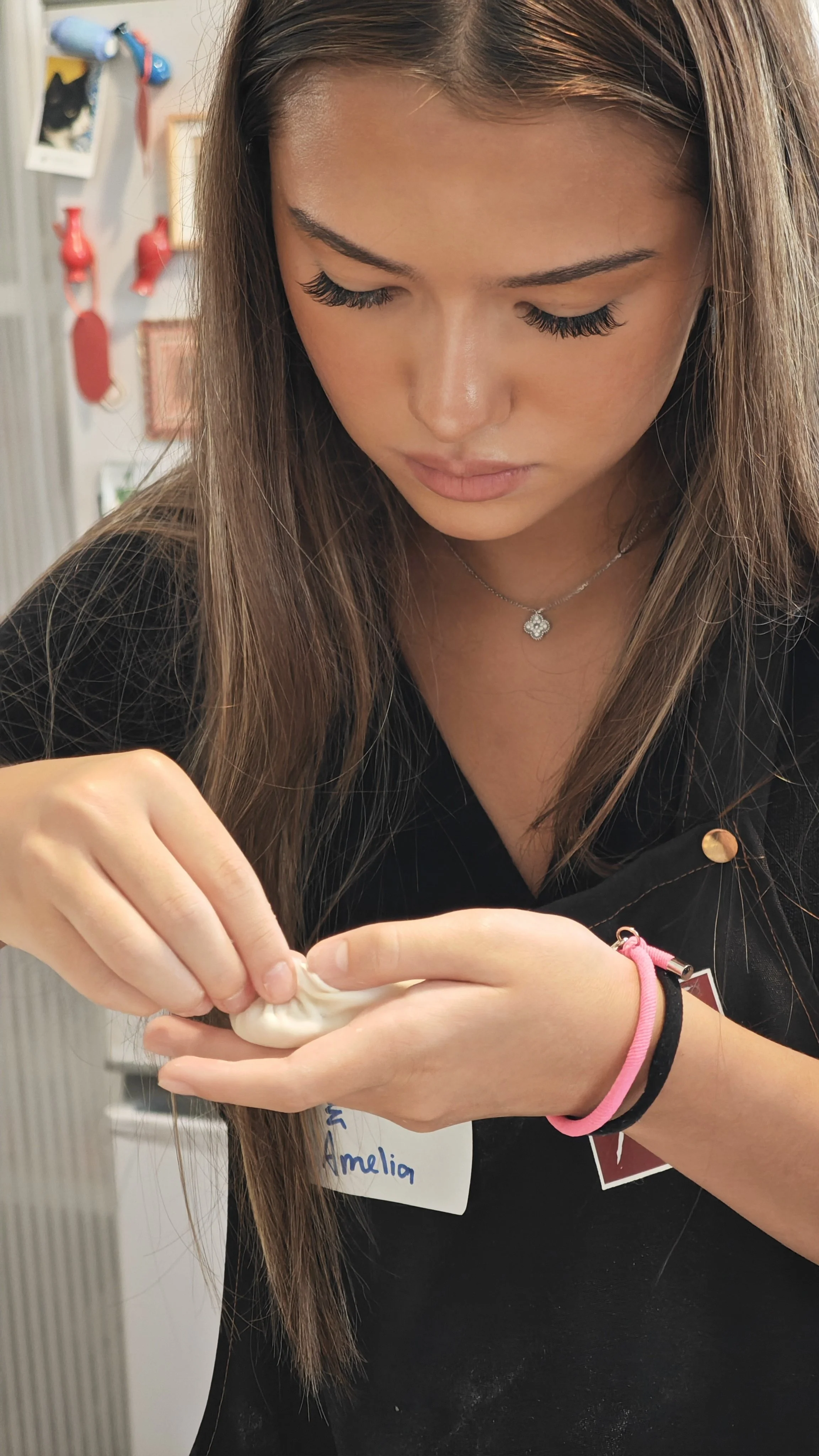
The older sister was especially determined to follow our technique exactly.
She watched carefully as I placed the dough in my hand and shaped the dumpling from there. She followed the same method almost perfectly from the very beginning.
Her dumplings were good—but there was one small problem.
They weren't quite as beautiful as those made by her brother and boyfriend.
So I suggested something simple:
For beginners, try shaping the dumpling on the table instead of directly in your hand.
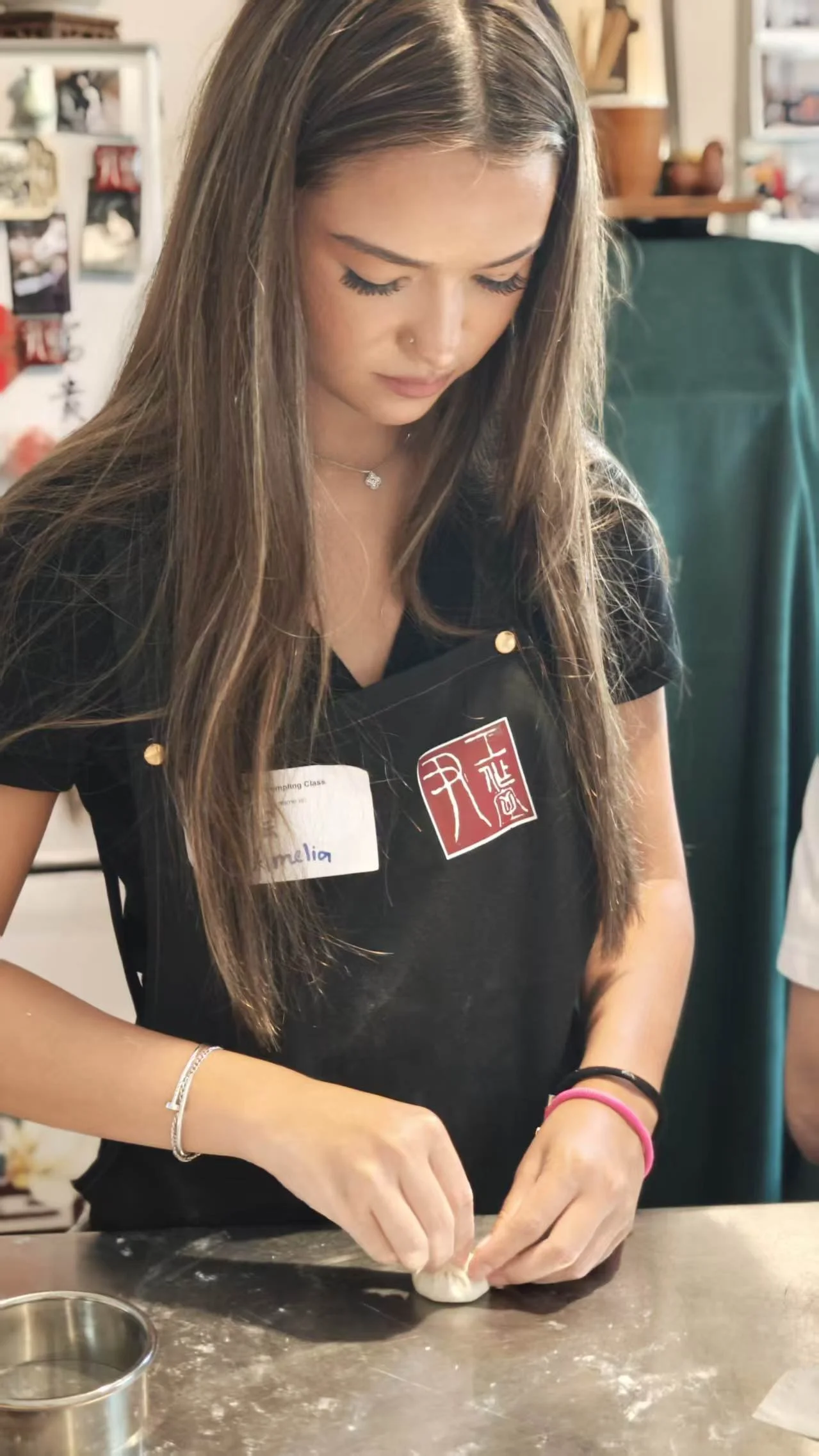
Amelia trying folding on the table
It gives you a little more stability and makes it easier to control the folds.
After switching techniques, her dumplings immediately became much more beautiful.
It was a small adjustment, but it made a big difference.
That's one of the things we enjoy most about teaching hands-on cooking: sometimes one small change in technique is all it takes.
The "Best Dumpling" Competition
Before we officially started, their mother announced that there would be a little reward for whoever made the best xiaolongbao.
That immediately added a little competitive spirit to the class.
Freddie's very first dumpling was particularly impressive.
Freddie's mother notices his particularly thin dumpling wrapper.
It was big, nicely shaped, and looked good enough to win the competition.
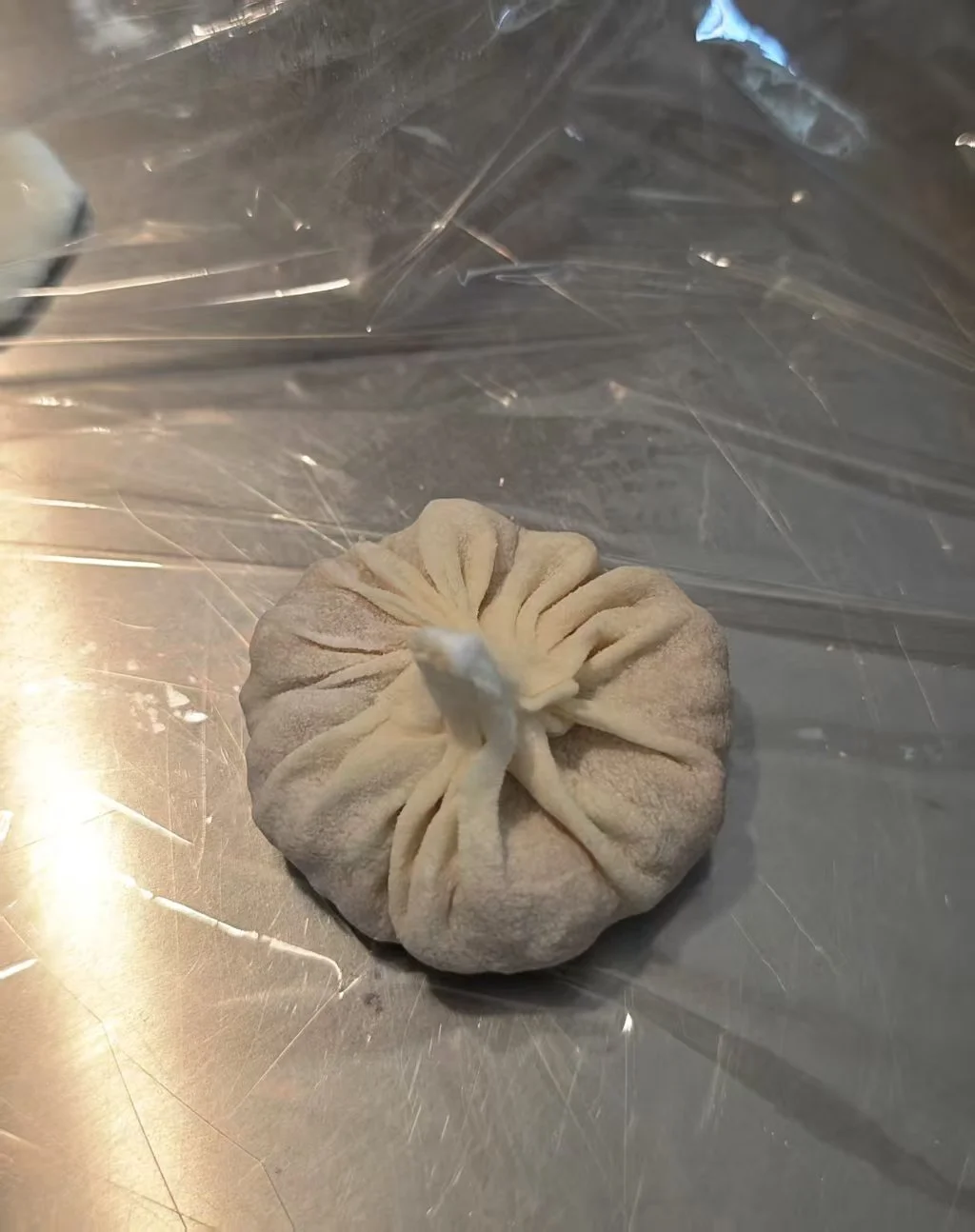
The younger brother's very first dumpling was particularly impressive.
He proudly gave it to his mother.
There was just one problem.
He had used a little too much flour while working with the dough, which made the wrapper look slightly dry.
His later dumplings were much better, although some still carried a little more flour than necessary.
But when it came time to taste them, none of that seemed to matter.
He took one bite.
Then another.
And then he kept saying:
"It's so good! It's better than Din Tai Fung!"
We couldn't help laughing.
And this wasn't even the first time we'd heard that comparison recently.
Apparently, our xiaolongbao are having quite a good couple of weeks.
A Little Teenage Sweetness—and One Very Oblivious Third Wheel
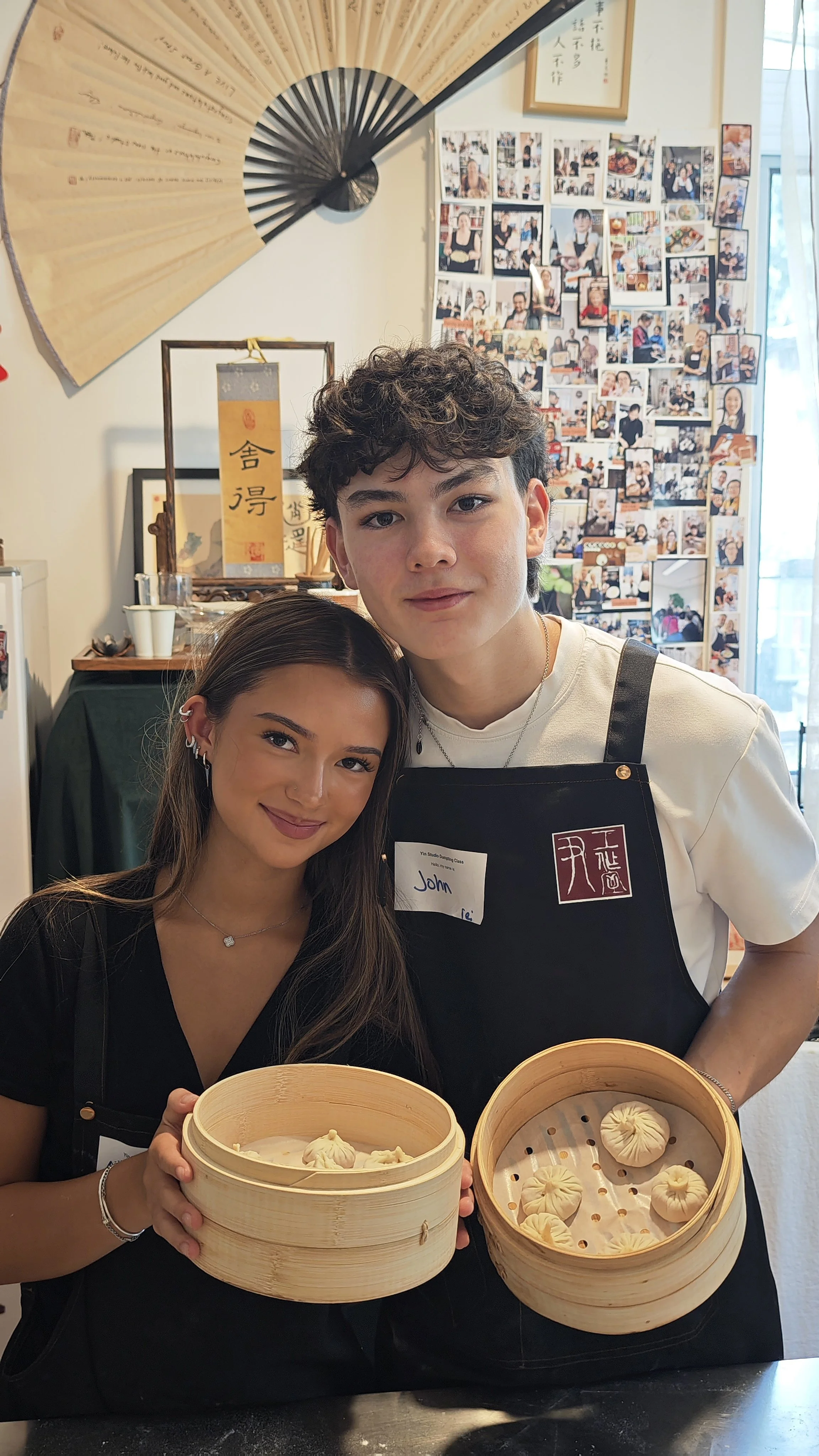
The older sister and her boyfriend also brought a little teenage sweetness to the afternoon.
Amelia and John also brought a little teenage sweetness to the afternoon.
Her mother and I couldn't help teasing them a little. Meanwhile, Freddie was right there with them, completely unaware that he had somehow become the world's most enthusiastic third wheel.
He didn't seem to mind at all. In fact, he seemed perfectly happy being part of everything.
Watching them together made us smile. There is something wonderfully sweet about teenage relationships—the kind of sweetness that those of us in our forties can only look back on with a little amusement and perhaps a little envy. 😂
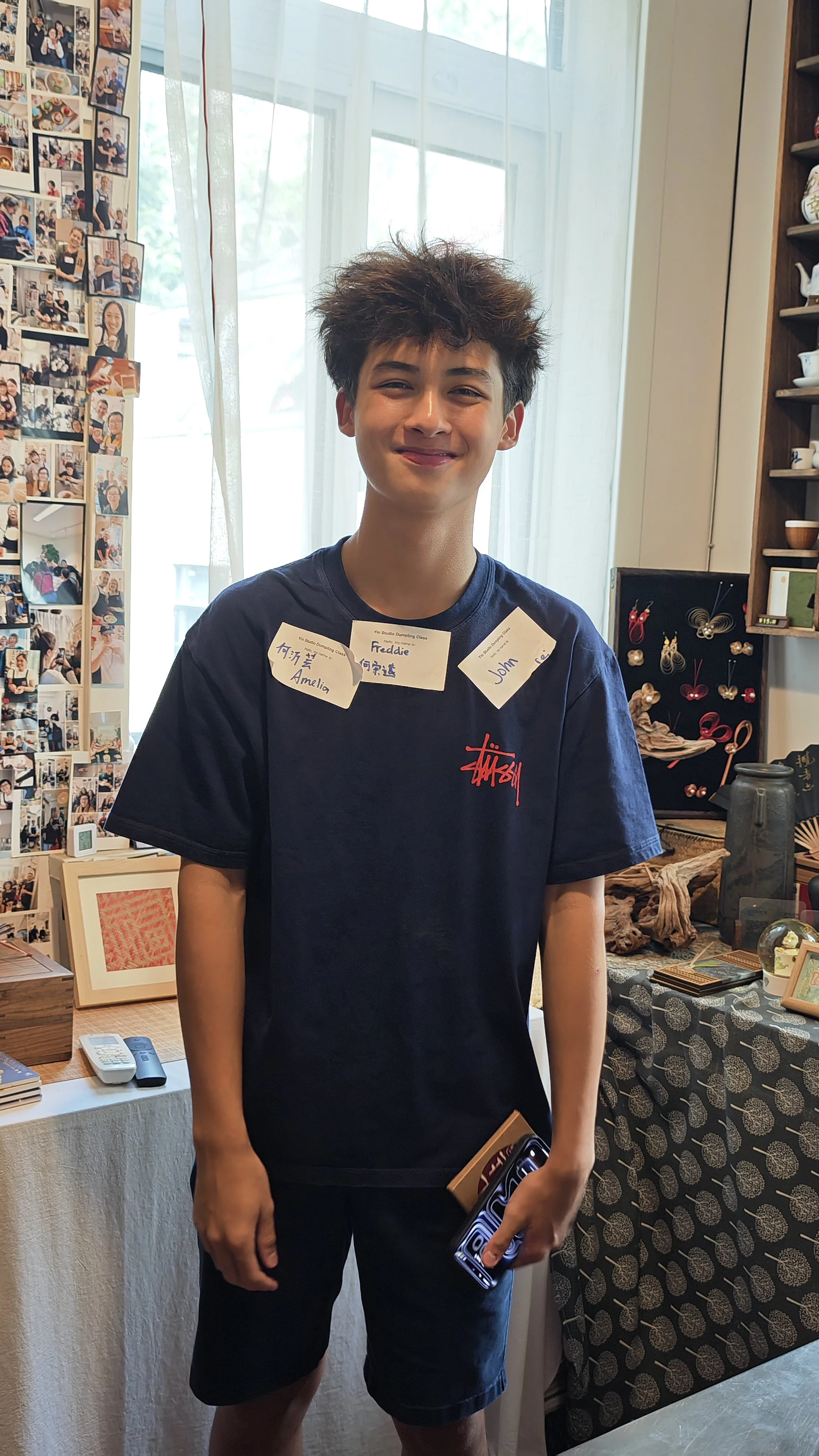
Meanwhile, Freddie had claimed all three name stickers for himself. 😂
More Than Just a Cooking Class
What made this group special wasn't that every dumpling was perfect.
It was watching three teenagers take responsibility for the whole process, help each other, learn from mistakes, and enjoy something they had made with their own hands.
Their mother stayed nearby throughout the experience, watching them cook and occasionally joining the conversation.
After the class, her assistant sent us a message saying that the children thought the activity was "very interesting and fun", and that the experience had exceeded their expectations.
They also particularly enjoyed the soup dumplings and described the broth as wonderfully fresh and flavorful.
We're always happy when guests enjoy the food.
But hearing that the teenagers found the whole process fun and memorable means even more to us.
Because that's exactly what we hope a cultural cooking experience can be.
Not simply learning a recipe.
Not simply eating something delicious.
But spending an afternoon learning, laughing, making mistakes, and creating something together.
And perhaps discovering that homemade xiaolongbao can be surprisingly good.
Even better than Din Tai Fung—according to our toughest 13-year-old critic.
By the end of the afternoon, the table was full of handmade xiaolongbao, flour, laughter, and a few very proud teenagers.
We took one last photo together before they left.
Three teenagers, three different personalities, and one very memorable afternoon in Shanghai.
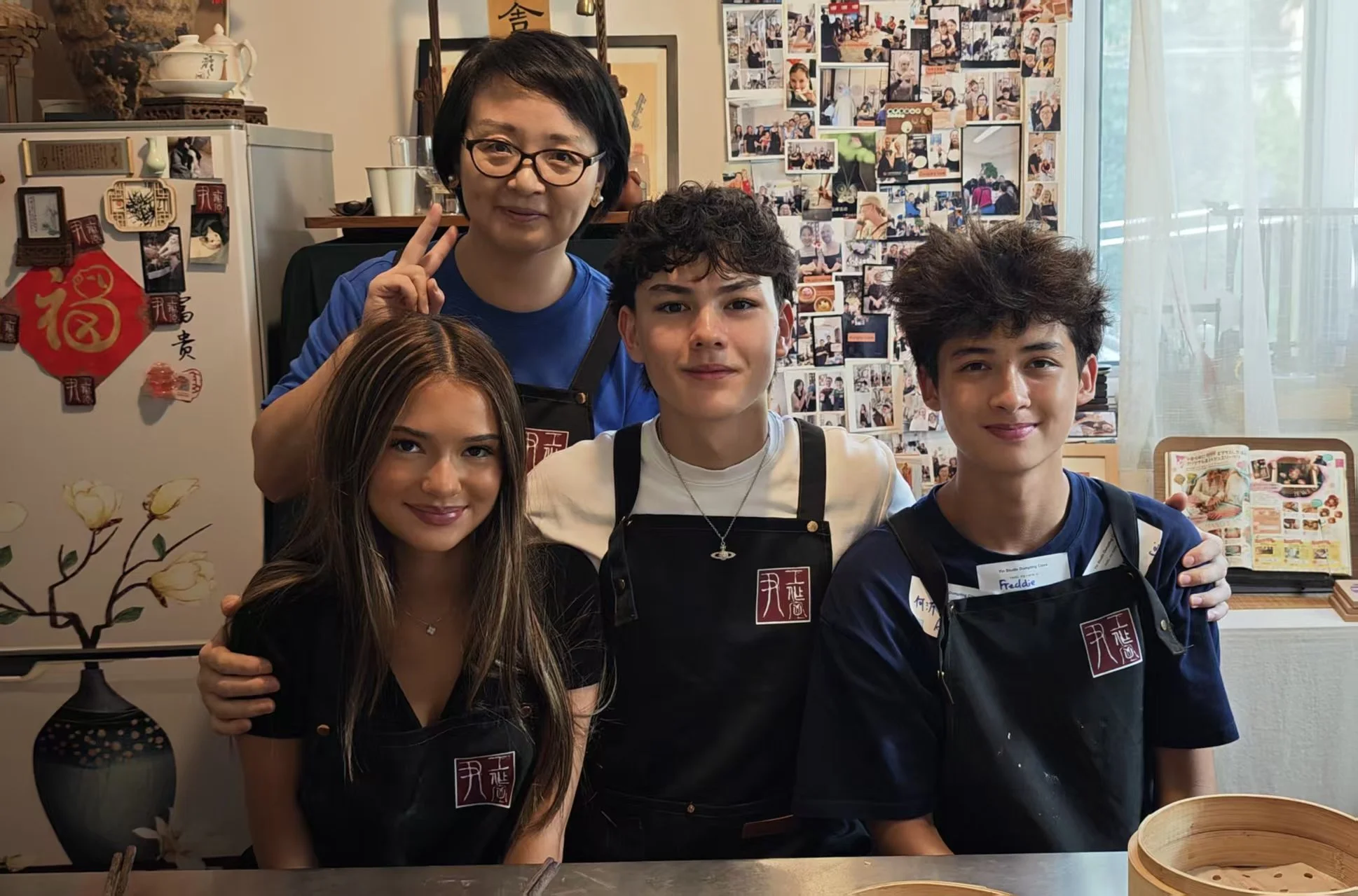
A little flour, a lot of laughter, and three new memories to take home from Shanghai.
What Their Family Thought
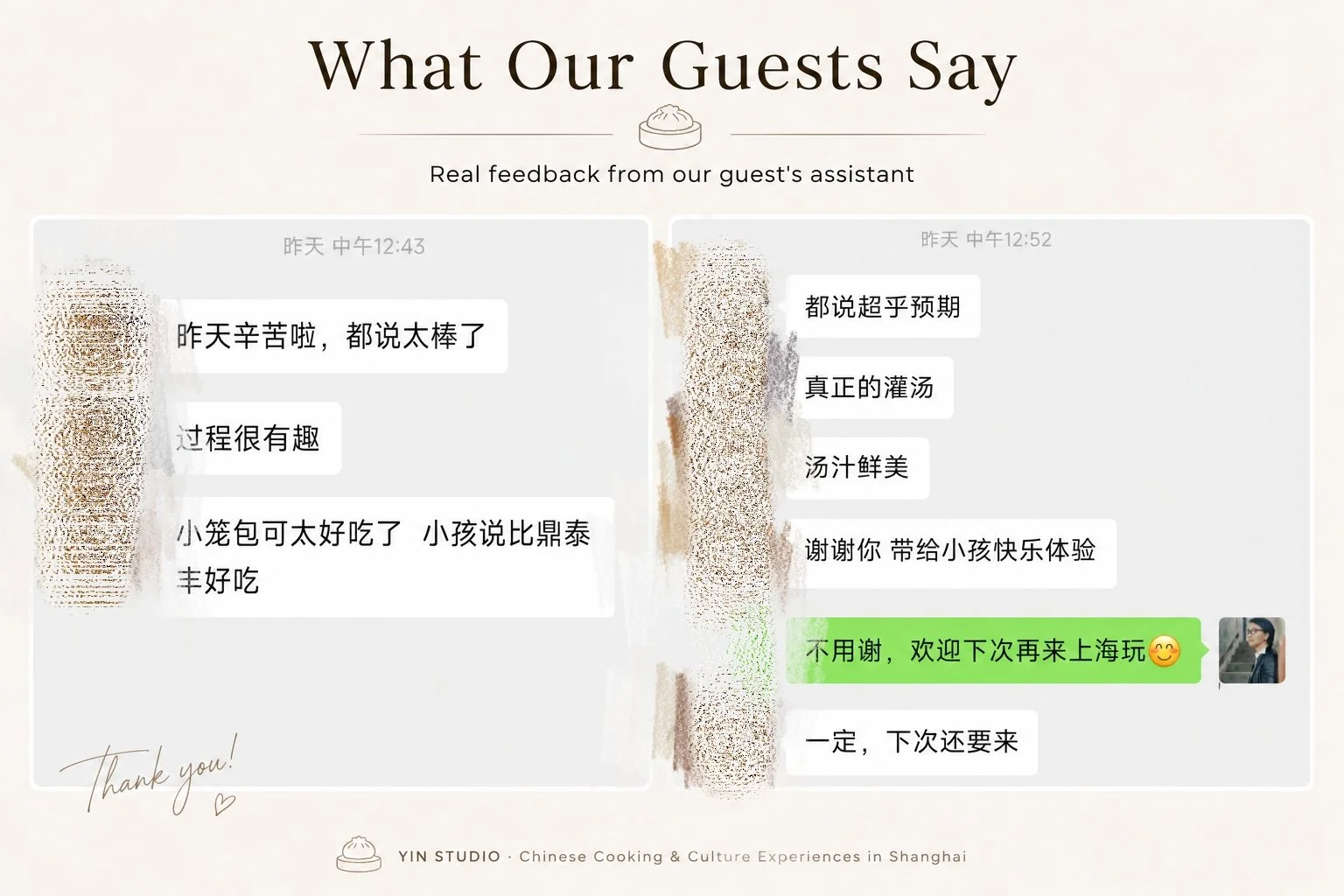
Feedback from the family's assistant after the experience.
Culture Note: Why Is Xiaolongbao So Special?
Xiaolongbao (小笼包) are Shanghai-style soup dumplings known for their delicate wrappers and flavorful broth inside.
Unlike ordinary steamed buns, xiaolongbao contain soup, which makes the folding and steaming process particularly important.
The traditional technique involves placing gelatinized soup stock inside the filling. During steaming, the gelatin melts and becomes the delicious broth inside the dumpling.
This is also why eating xiaolongbao requires a little care.
A good way for beginners is to pick one up gently, place it on a spoon, make a small opening in the wrapper, and let some of the hot soup escape before enjoying the rest.
And, of course, making them yourself makes the final bite even more satisfying.
Beginner Chinese
小笼包 (xiǎolóngbāo)
Meaning: Shanghai soup dumplings
小 (xiǎo) — small
笼 (lóng) — steamer basket
包 (bāo) — bun / to wrap
Literally, 小笼包 means something like "small steamer-basket buns."
太好吃了 (tài hǎochī le)
Meaning: "It's so delicious!"
This is one of the easiest Chinese phrases to use when eating.
And if you ever find yourself eating homemade xiaolongbao that you really love, you can simply say:
太好吃了!
We promise the cook will be happy to hear it.
Looking for a Teen-Friendly Cultural Experience in Shanghai?
Our private Chinese cooking classes are suitable for families, teenagers, and small groups.
You don't need previous Chinese cooking experience. We guide participants through the entire process, from preparing the dough and filling to shaping, steaming, and finally enjoying the dumplings together.
For teenagers, it's also a chance to do something hands-on and independent while discovering a different side of Chinese culture.
Come hungry. Bring your curiosity. And be prepared to make a lot of dumplings.
🥟 Make Xiaolongbao
Learn Shanghai's most famous dumpling from scratch.
Read More →
🍳 Chinese Cooking Class
Cook authentic Chinese dishes with local ingredients.
Read More →
📖 Guest Stories
Read more stories from our guests in Shanghai.
Read More →